

Write like a prophet on fire
you write what you read, ft. Lispector, Abdolmalekian, and Rumi

The silence of the night was scary:
as if it were about to say a fatal word.1
Because there’s a right to scream—
So I scream—2
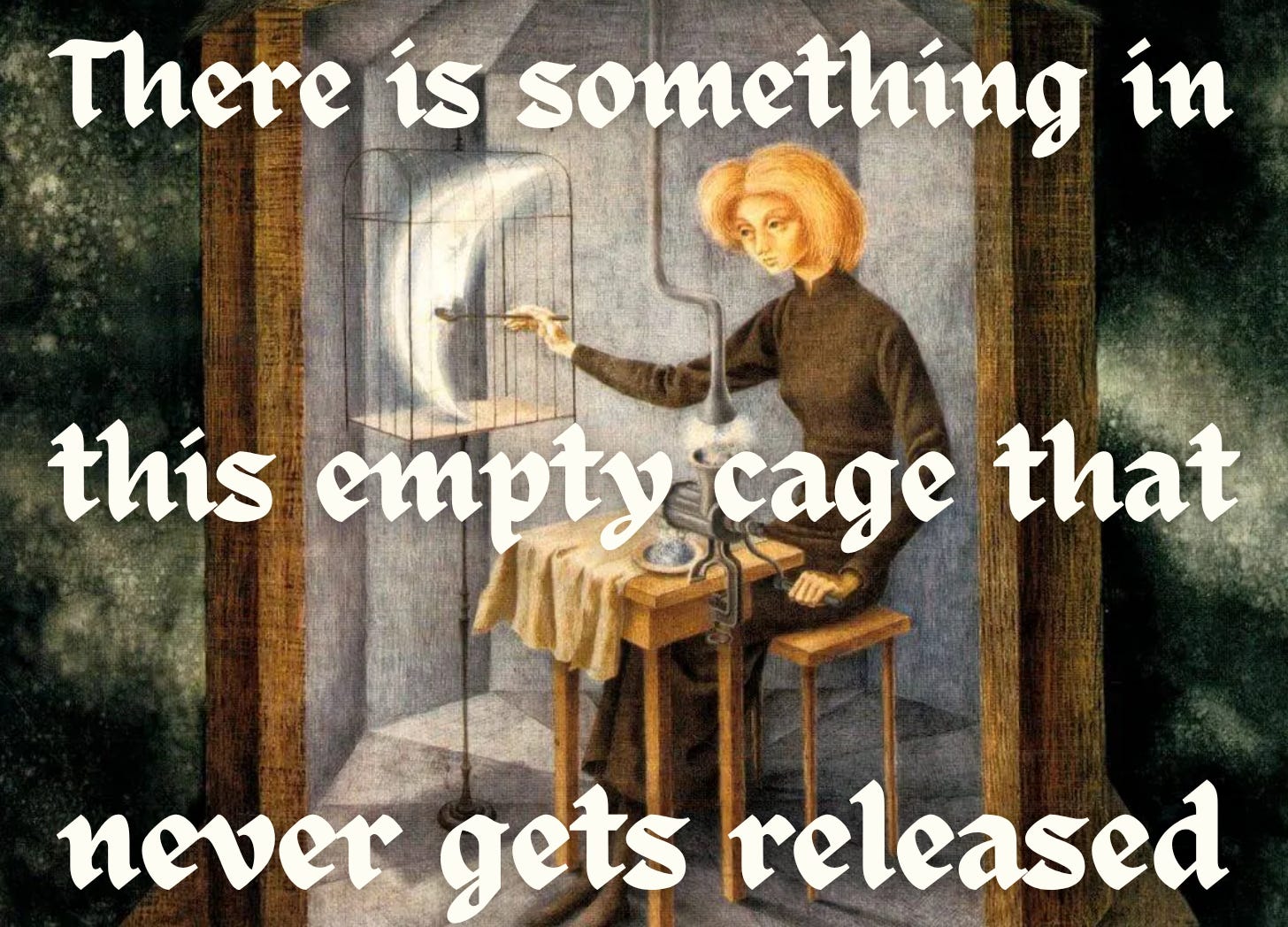
(There is something in this empty cage that
never gets released.3)
As long as I have questions and no
answers, I’ll keep on writing—
How do you start at the beginning if things
happen before they happen?4
(All the world begins with a yes!5)
—She like a stray dog was guided
exclusively by herself—6
(I turn my face away and lose half the world!7)
—I, too, from one failure to the next
have reduced myself to myself—8
(Since I am, the thing to do is be!9)
—but at least I want to encounter the world and its God.10
When I am, I am not.
When I am not, I am.11
A cento is a poem made of other poems.12
The Hour of the Star gifted me with a reader’s most longed-for experience—where one finds on every other page, sentences that reverberate in them like the words of a prophet. (For this reason, it felt crucial that I stopped myself from engulfing the novel all at once!—when I realized I was past the halfway mark, I put it down and ordered a physical copy to finish reading with.)
I had a similarly heart-rattling experience when I encountered Abdolmalekian’s words in the wilds of the internet. I came across “Long Exposure” on a Instagram post, clutching at the base of my throat in shock. Six quiet lines of poetry, none longer than four words—it so efficiently infiltrated my own longing that I only later noticed that my eyes were wet.
I was going through an old blog archive—three years after I first read “Long Exposure”—in which I found another centoish exercise I did that also collaged its words. I read those same lines as if for the first time—there is something / in this empty cage / that never gets released—which compelled me to finally read Abdolmalekian’s full poetry collection, Lean Against This Late Hour.
Lispector and Abdolmalekian write lines with all the summoning powers of a spell. They compel me to act towards something—I don’t yet know what.
In their writing, words are vessels of will—when they touch upon the world, they leave hard grooves in even stone—they carve paths through the earth. They are bullheaded, determinedly moving along the path they’ve decided—and every other thought you could have thunk moves out of the way or is flattened out of existence. (Whatever you were going to think, you never did and will no longer.) Had I met them earlier, theirs is writing that have would have altered the course of my life as an artist. I would have set to writing seriously, sooner, or would at least have been comforted by the knowing that one could pray this way.
Three years ago, some months after I had written my Abdolmalekian cento, I participated in a writing workshop which illuminated certain parts of myself that had been born in the dark and continued to live there. My writing was nebulous, experimental—with no structure, focus, or goal. I was encouraged by my panelists and co-fellows to meet the nakedness of my feelings with a steady gaze and not to turn away. A writer’s bravery is expressed in their clarity—or at least that’s what I surmised from their evaluations. I was frustrated with my own cowardice, but writing, even before then, was already a painful wringing of self—largely unpleasant and evidently unsustainable.
I’ve since then determined to build the muscles for structure and clarity, starting the UGLIES! project on here and writing more essayistically, especially around films, media, and developing an artistic practice. I did find that I had, over time, become braver somewhat—although not quite yet enough to walk in the sun. My progress was encouraging as much as I felt that it was lacking—I could not yet walk in the sun, when my dream was to walk while engulfed in flames.
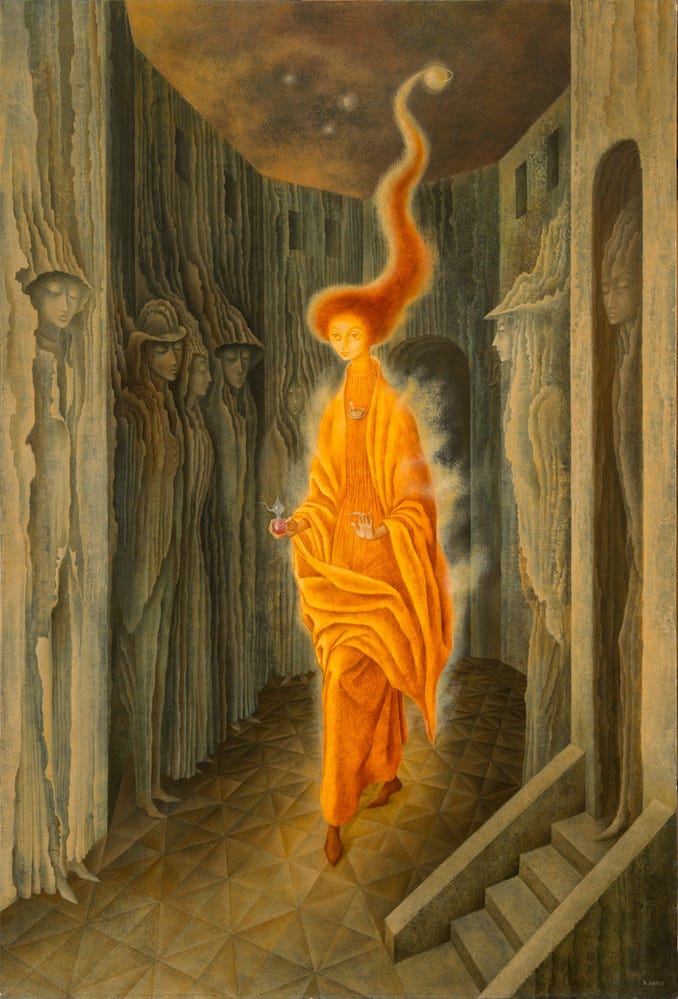
And so I’ve sought out the wisdom of an old self—that mad woman; the raving mystic that now sleeps sonorously. I have built muscles for clarity; my body is not as frail as it had been when it was ill with melancholy. My heavy limbs long to harness magic as it has never been able; to bleed.
The Hour of the Star’s narrator begins their account by disclaiming: “I only achieve simplicity with enormous effort.” The work before me is that of re-mystifying my writing; to make it as clear as it is complicated—like Lispector, like Abdolmalekian, like Tokarczuk, Calvino and the many other poets and authors whose spells continue to carve through this hard-faced earth.
Recent writing ✶
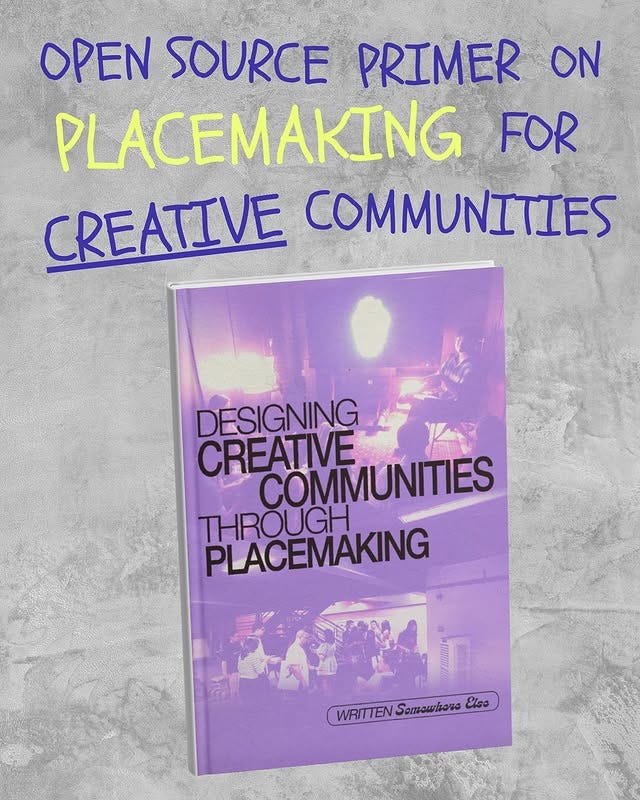
Last October 18, in line with Design Week’s movement towards ginhawa, Somewhere Else launched an introductory placemaking primer on Filipino creative communities with a live podcast recording. If you are interested in community building, specifically around media and the arts, this might be interesting to u!
GET UGLY!—Thanks for reading UGLIES! an artist’s notebook on media + creativity. Through personal encounters with films, games, lit and music, BüGGY constellates the complex relationships among people, culture, life, and art! which she openly navigates with humor and delight. This newsletter is free to read, so if you enjoyed this, you are welcome to express support by liking, sharing, or commenting シ
p. 37, Lispector
p. 19, Lispector
p. 35, Abdolmalekian
p. 1, Lispector
p. 1, Lispector
p. 37, Lispector
p. 23, Abdolmalekian
p. 37, Lispector
p. 23, Lispector
p. 37, Lispector
p. 58, Rumi
Or in this case, a novel too. Excerpts featured are pulled from The Hour of the Star by Clarice Lispector, Lean Against This Late Hour by Garous Abdolmalekian, translated by Ahmad Nadalizadeh & Idra Novey and Gold, a selection of Rumi’s poetry, translated by Haleh Liza Gafori. Note: I took some creative liberty with line breaks and punctuation.